

A denial letter from the Social Security Administration can feel discouraging. It isn’t the end. The majority of initial SSDI claims are denied, and many go on to be approved through the appeals process.
Why Initial Claims Are Often Denied
Initial denials frequently result from incomplete medical documentation, insufficient explanation of how the condition limits work function, or missing records. The early review stage is largely paper-based and may not fully capture the impact of your condition.
The appeals process is designed to address this. Each stage gives you the opportunity to add evidence, clarify limitations, and present a more complete picture.
Step 1: Reconsideration
The first appeal is a reconsideration — a review by a different SSA examiner who was not involved in the original decision. You can submit additional medical evidence at this stage. Many claims are still denied at reconsideration, but it’s a required step before requesting a hearing.
Step 2: The Disability Hearing
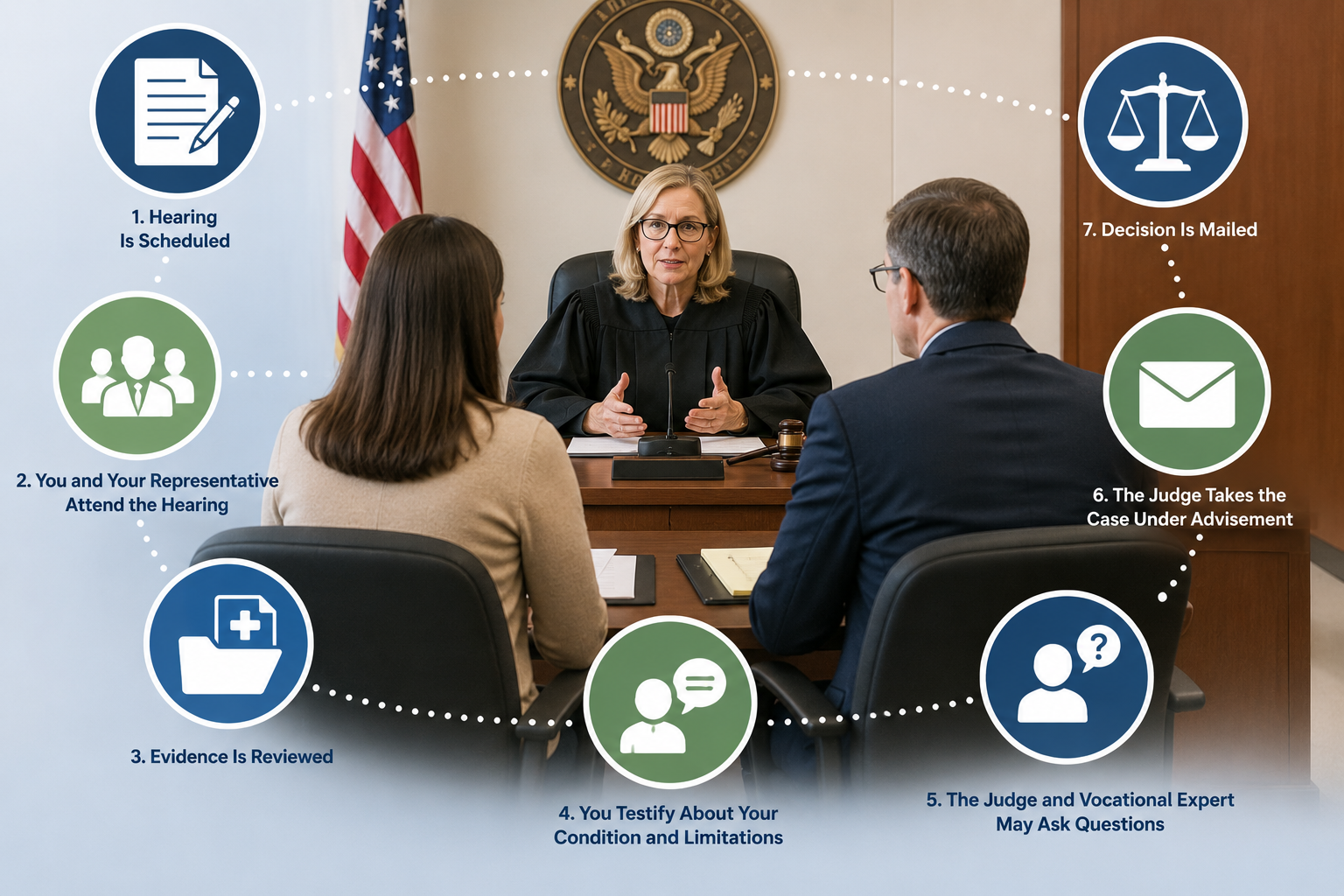
If reconsideration is denied, you can request a hearing before an administrative law judge (ALJ). This is often the most significant stage. You’ll have the opportunity to testify, present updated records, and respond to the judge’s questions. A vocational expert may also appear to discuss what types of work, if any, someone with your limitations could perform.
Timing Is Critical
Each stage of the appeals process has strict deadlines — typically 60 days from the date of a denial notice. Missing these windows can mean starting over. Acting promptly after any denial preserves your right to continue pursuing benefits. Our team is ready to help you build a stronger appeal before any deadline passes.