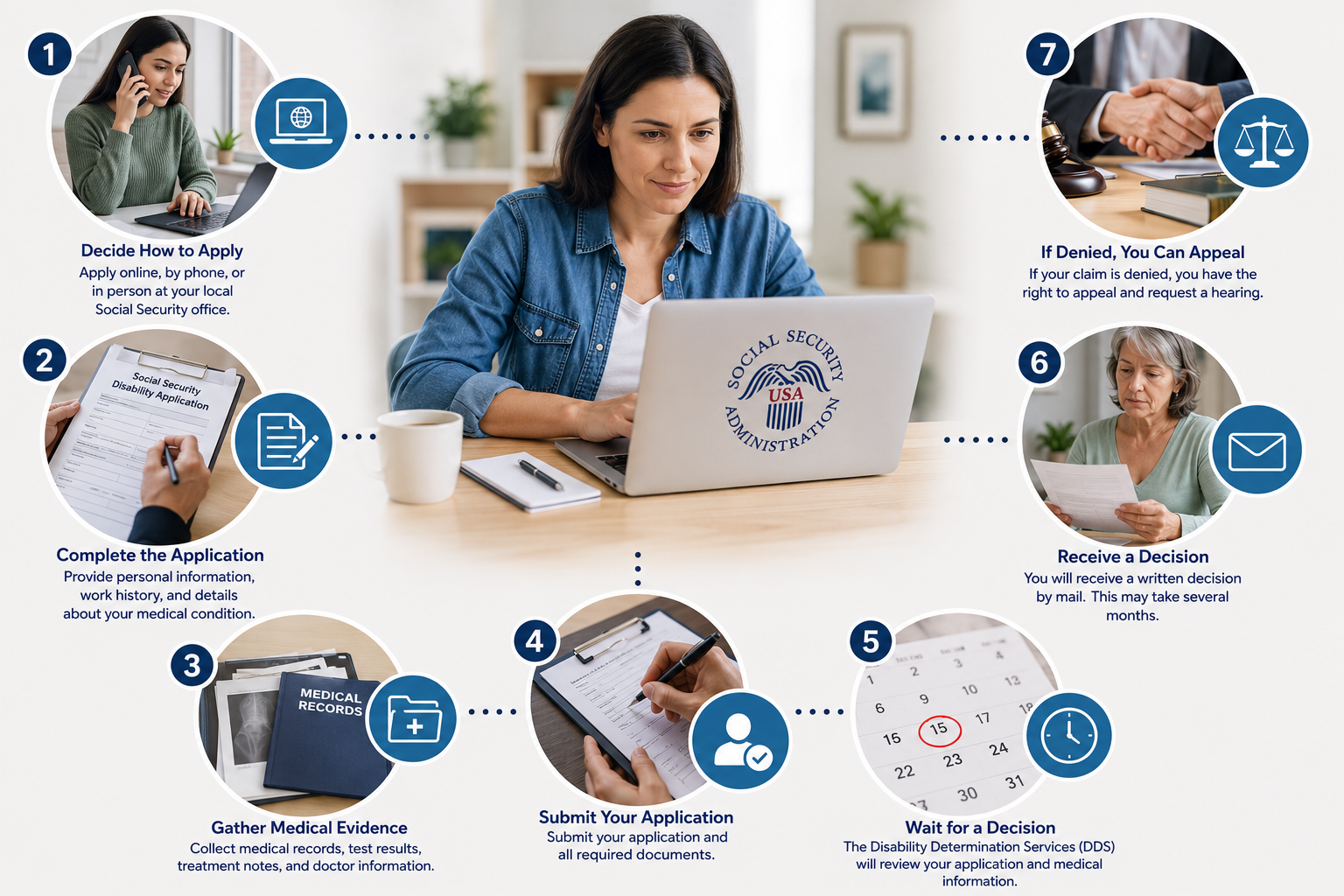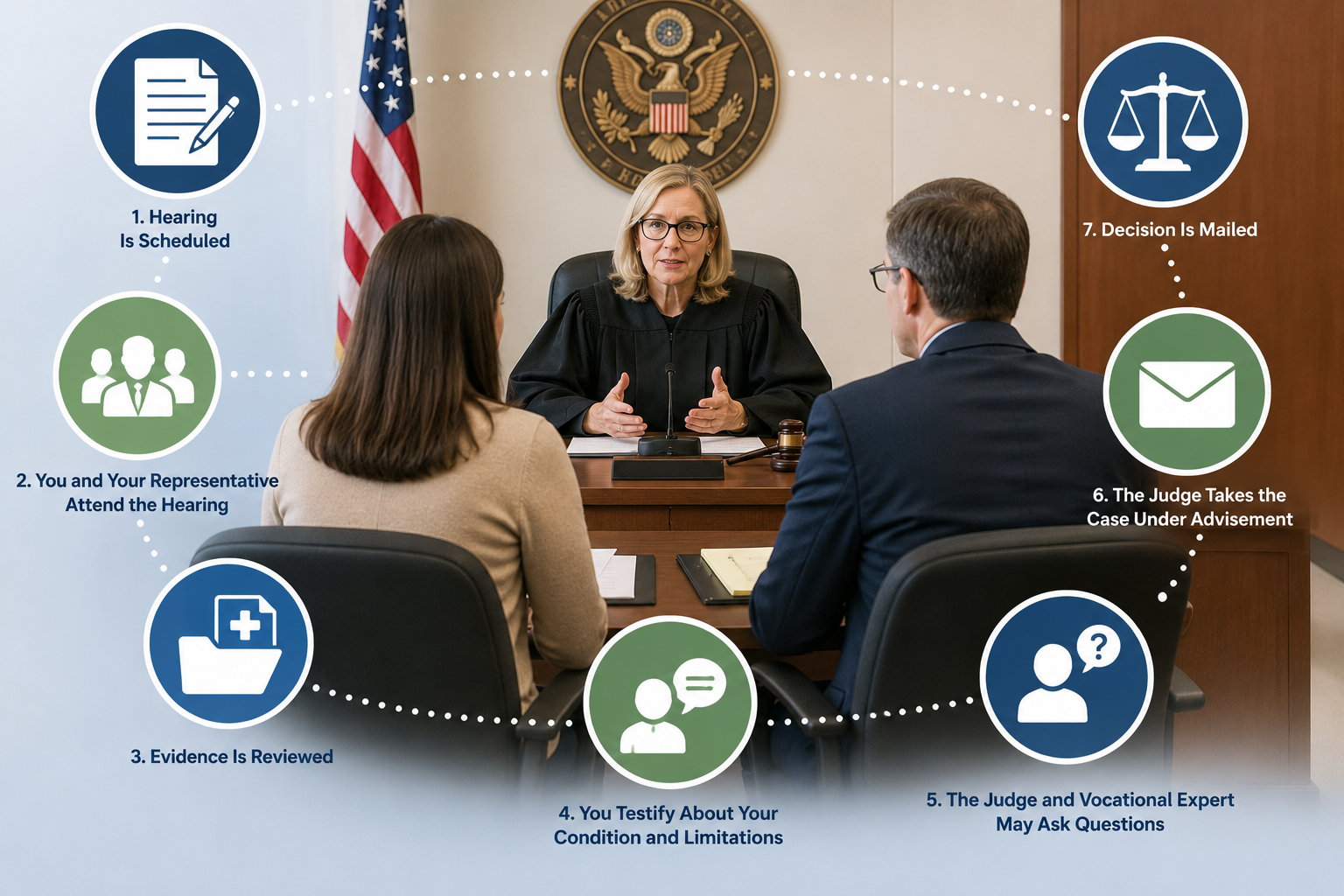


One of the most difficult aspects of the SSDI process is the time it takes to receive a decision. From initial application to final resolution, the process can span months or even years — and for people unable to work due to a disabling condition, that wait creates real financial strain. Understanding why the process takes as long as it does, and what can be done to avoid unnecessary delays, helps set realistic expectations.
Initial applications typically take three to six months for a decision from Disability Determination Services. This timeframe reflects the time needed to gather medical records, review the evidence, and apply the SSA’s eligibility criteria. Cases involving complex medical conditions or incomplete documentation tend to take longer. If a claim is denied at the initial level and a reconsideration is filed, that adds additional months to the timeline.
And if the case proceeds to a hearing before an administrative law judge, the wait can extend to a year or more depending on the region and the ALJ’s caseload. The national average hearing wait time has historically been around 12 months. There are limited ways to accelerate the process. The SSA’s Compassionate Allowances program expedites decisions for applicants with certain severe conditions, including terminal cancers and a number of rare diseases.
The Terminal Illness (TERI) program similarly accelerates cases involving terminal diagnoses. If your condition qualifies for either program, flagging it at the time of application can shorten your wait significantly. Submitting a complete, well-documented application from the start — and responding promptly to any SSA requests — prevents delays that are entirely within your control.
Our team at Grech Law Firm Attorney & Counselor helps Michigan clients manage their claims efficiently and avoid preventable delays. Contact us to discuss your case.