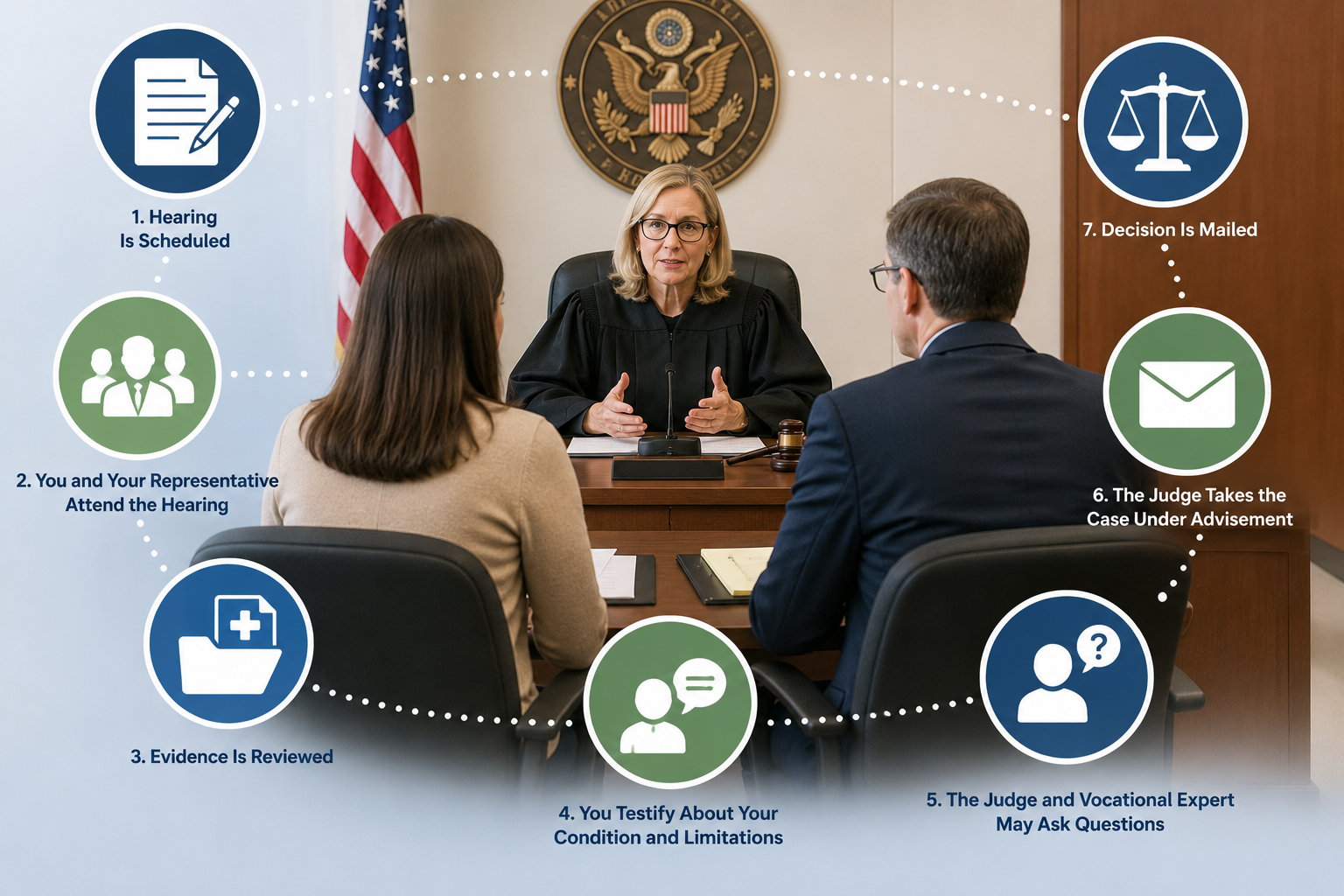


The word “disabled” means different things in different contexts — but for purposes of Social Security Disability Insurance and Supplemental Security Income, it has a very specific legal definition that determines eligibility for benefits. Under Social Security rules, a person is disabled if they have a medically determinable physical or mental impairment (or combination of impairments) that prevents them from engaging in substantial gainful activity (SGA) and that has lasted or is expected to last at least 12 months or result in death.
Each component of that definition matters. “Medically determinable” means the condition must be documented through objective medical evidence — symptoms alone are not sufficient. “Physical or mental impairment” is broad and encompasses virtually any condition that can be documented clinically. “Substantial gainful activity” refers to performing significant work for pay or profit — in 2025, earning more than $1,620 per month (or $2,700 for blind individuals) generally constitutes SGA.
And the duration requirement means temporary conditions that are expected to resolve within a year generally don’t qualify. The SSA applies a five-step sequential evaluation to determine whether an applicant meets this definition: Is the person currently working above the SGA threshold? Is the impairment severe? Does it meet or equal a listed condition? Can the person return to past relevant work?
Can the person perform any other work given their age, education, and transferable skills? Passing all five steps in favor of the claimant results in an approval. Failing at any step results in a denial at that stage.
Our team at Grech Law Firm Attorney & Counselor helps Michigan residents understand whether they meet Social Security’s definition of disability and how to document their claim effectively. Contact us for a free consultation.