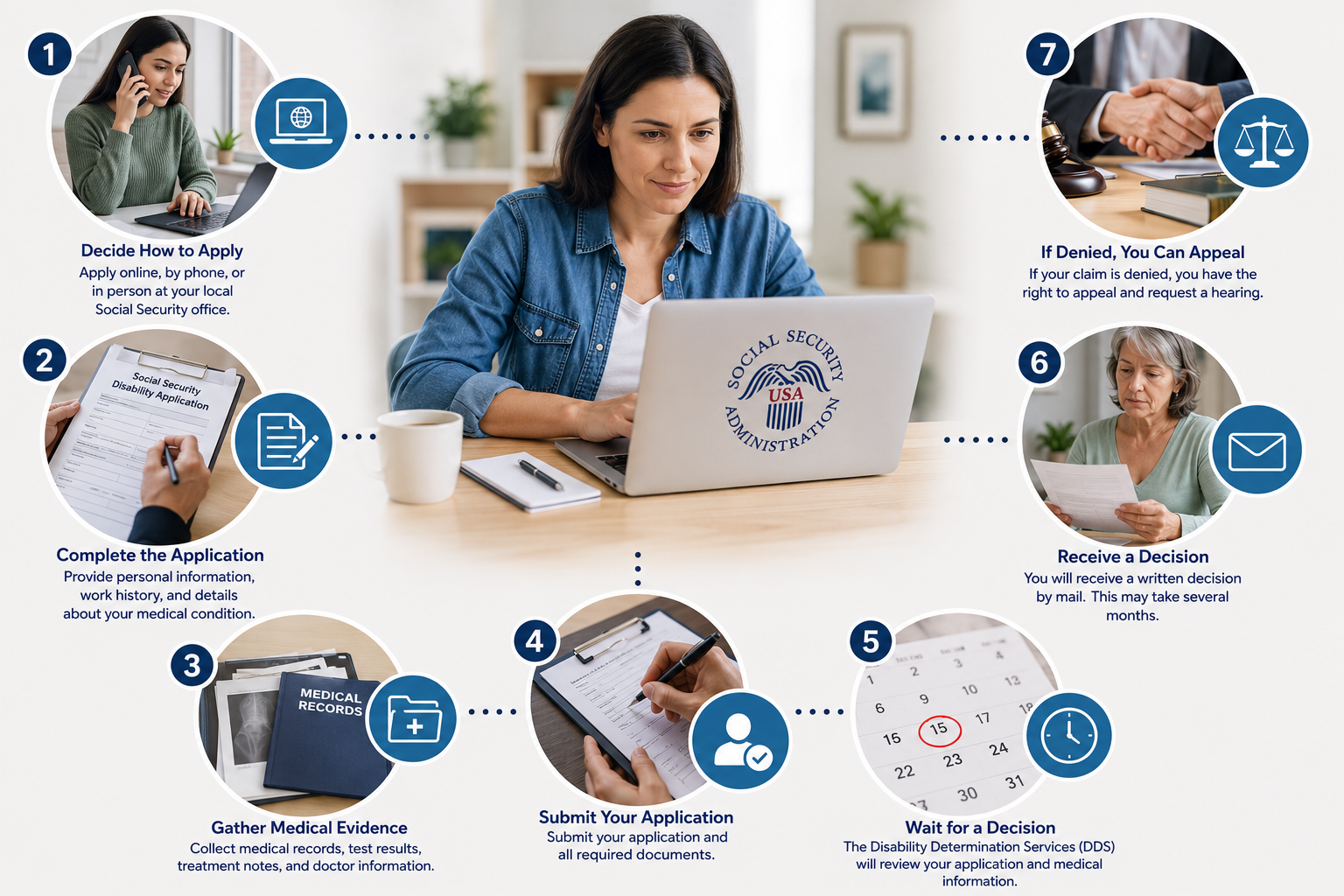


Applying for Supplemental Security Income requires more than submitting a form — you need to support your application with thorough documentation covering both your disability and your financial situation. Gathering the right evidence before you apply can prevent delays and improve your chances of approval. Medical records are the foundation of the disability portion of your SSI claim.
These should include records from all treating physicians, specialists, therapists, and other healthcare providers. The records should document your diagnosis, ongoing treatment, medications, and — most importantly — how your condition affects your ability to function in daily life. The SSA evaluates functional limitations, not diagnoses alone. A statement from your treating physician describing your limitations in a work context is especially valuable.
If your doctor can describe specifically what you cannot do — how long you can sit, stand, or walk, whether you can concentrate for extended periods, whether you can reliably maintain a schedule — that information directly supports your claim. Financial documentation is required because SSI is a needs-based program. You will need to provide proof of income from all sources, including wages, pension payments, and any other benefits.
Bank statements and documentation of your assets — savings accounts, investments, and property — are also required. If you own a home or one vehicle, those are generally excluded from the resource calculation. Proof of identity and residency is also necessary. This includes a birth certificate or passport, Social Security card, and documentation of your current address. If you have previously applied for SSI or SSDI, records from prior applications and any decisions issued can be relevant, particularly if your condition has worsened since a prior denial.
Our team at Grech Law Firm Attorney & Counselor helps Michigan SSI applicants prepare complete, well-supported applications. Contact us for a free consultation.