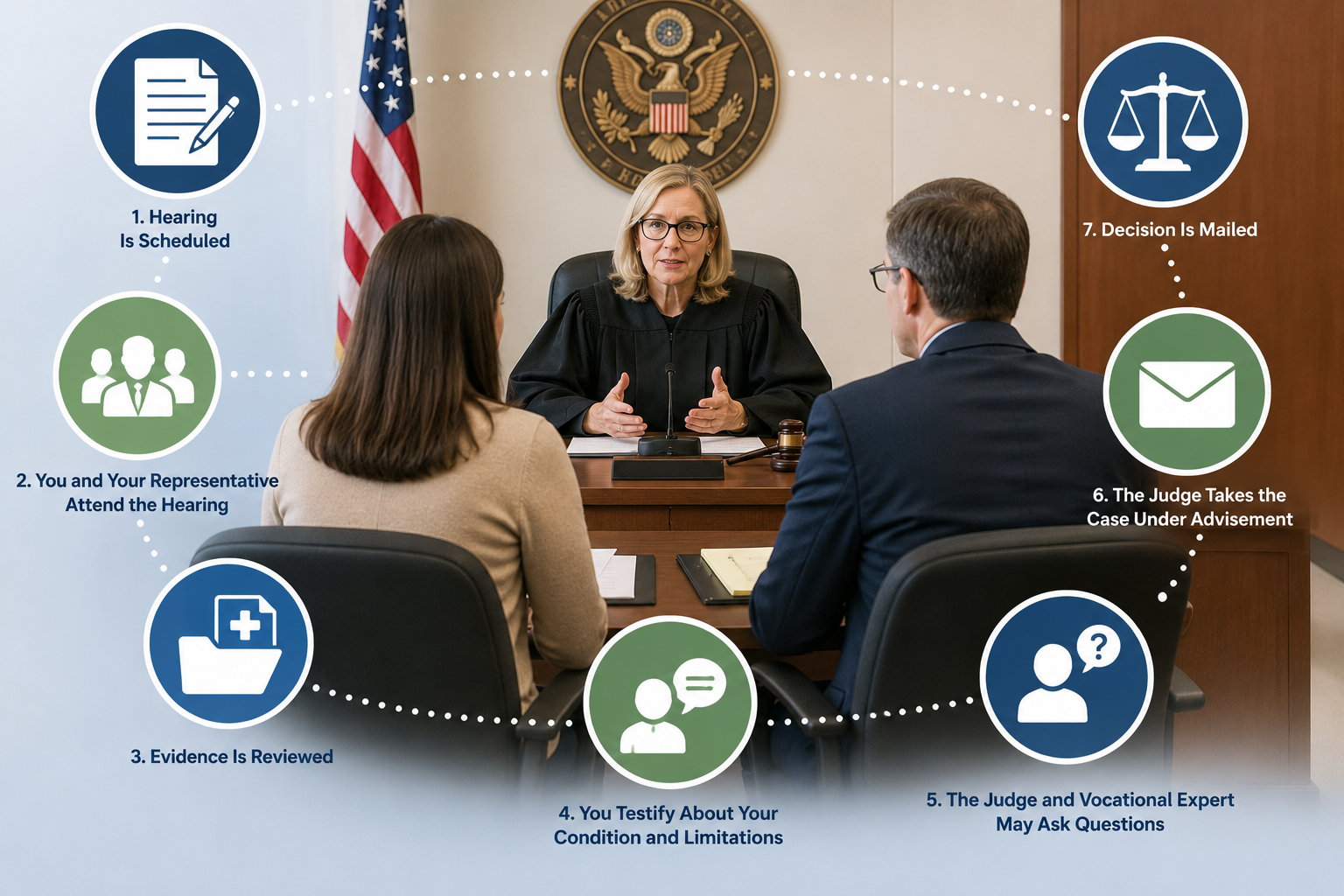


A Social Security Disability hearing before an administrative law judge is the most detailed stage of the SSDI or SSI review process — and for many applicants, it represents their best opportunity for approval. Preparation matters significantly at this stage, and arriving ready to clearly present your case can make a real difference in the outcome. Review your file before the hearing.
Your complete case record is available to you, and reading through it helps ensure there are no surprises. If records are missing, incomplete, or contain errors, there may be time to address those issues before the hearing date. Update your medical records. The period between your initial application and your hearing can span a year or more. Any treatment, diagnoses, or evaluations that occurred after your initial filing should be submitted before the hearing.
Updated records reflect your current condition and can provide additional support for your claim. Practice describing your limitations clearly. The judge will ask questions about your daily life, your symptoms, and why you cannot work. Think through honest, specific answers — not general statements, but concrete examples. How far can you walk before pain stops you? How long can you sit at one time?
How many days a month do you have bad days that prevent activity? Specific answers are more useful than vague ones. Understand the role of the vocational expert. Most hearings include testimony from a vocational expert who discusses what kinds of jobs exist for someone with your limitations. Your attorney can cross-examine the vocational expert to challenge any assumptions that don’t accurately reflect your situation.
Arrive on time and dressed professionally. The setting is less formal than a courtroom, but it is still an official legal proceeding. Punctuality and presentation signal that you take the process seriously.
Our team at Grech Law Firm Attorney & Counselor prepares Michigan clients thoroughly for disability hearings. Contact us to discuss your upcoming hearing.