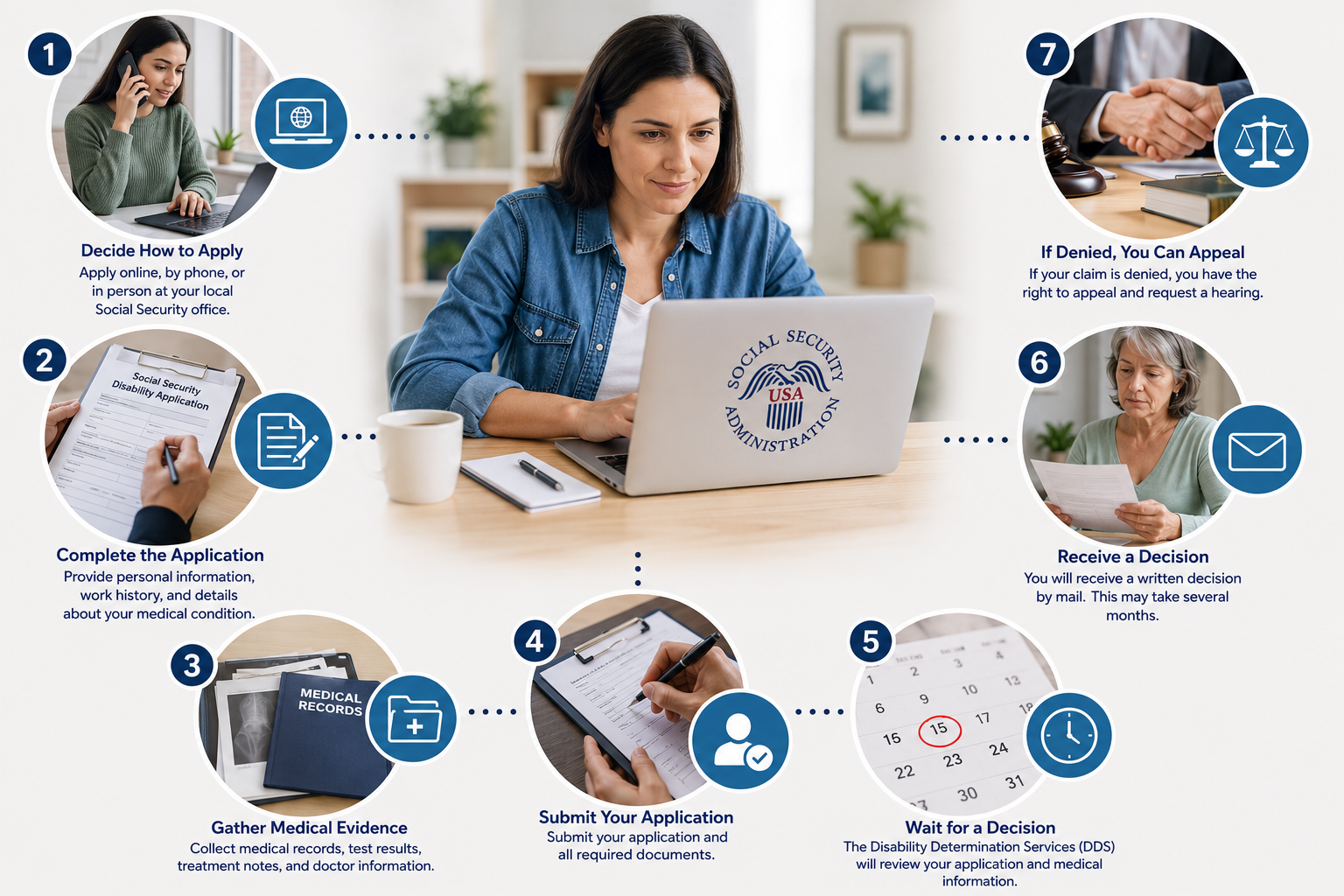


To qualify for Social Security Disability Insurance benefits, you must satisfy requirements in two areas: your medical condition and your work history. Meeting both is necessary for an approved claim. The medical requirement is that you have a physical or mental impairment — or a combination of impairments — that prevents you from engaging in substantial gainful activity and that has lasted or is expected to last at least 12 months, or that is expected to result in death.
The condition must be documented through clinical and laboratory findings, not symptoms alone. The SSA evaluates not just your diagnosis but how your condition limits your ability to perform work-related functions. The work history requirement relates to your insured status under the SSDI program. You must have earned sufficient work credits through employment covered by Social Security.
Credits are based on annual earnings — in 2025, you earn one credit per $1,810 in earnings, up to four credits per year. Most applicants need 40 total credits, with 20 earned in the 10 years prior to disability onset. Younger workers may qualify with fewer credits. Your insured status is not permanent. If you stop working, you can eventually lose your insured status if too much time passes.
This is one reason applying for SSDI promptly after becoming disabled matters — the longer you wait, the greater the risk that your insured status lapses. After applying, your case is reviewed by Michigan’s Disability Determination Services using a five-step evaluation process. This process considers whether you are working above the SGA threshold, the severity of your condition, whether your condition meets a listed impairment, whether you can return to past work, and whether you can perform any other work.
Our team at Grech Law Firm Attorney & Counselor helps Michigan residents understand and document their eligibility for SSDI. Contact us for a free consultation.