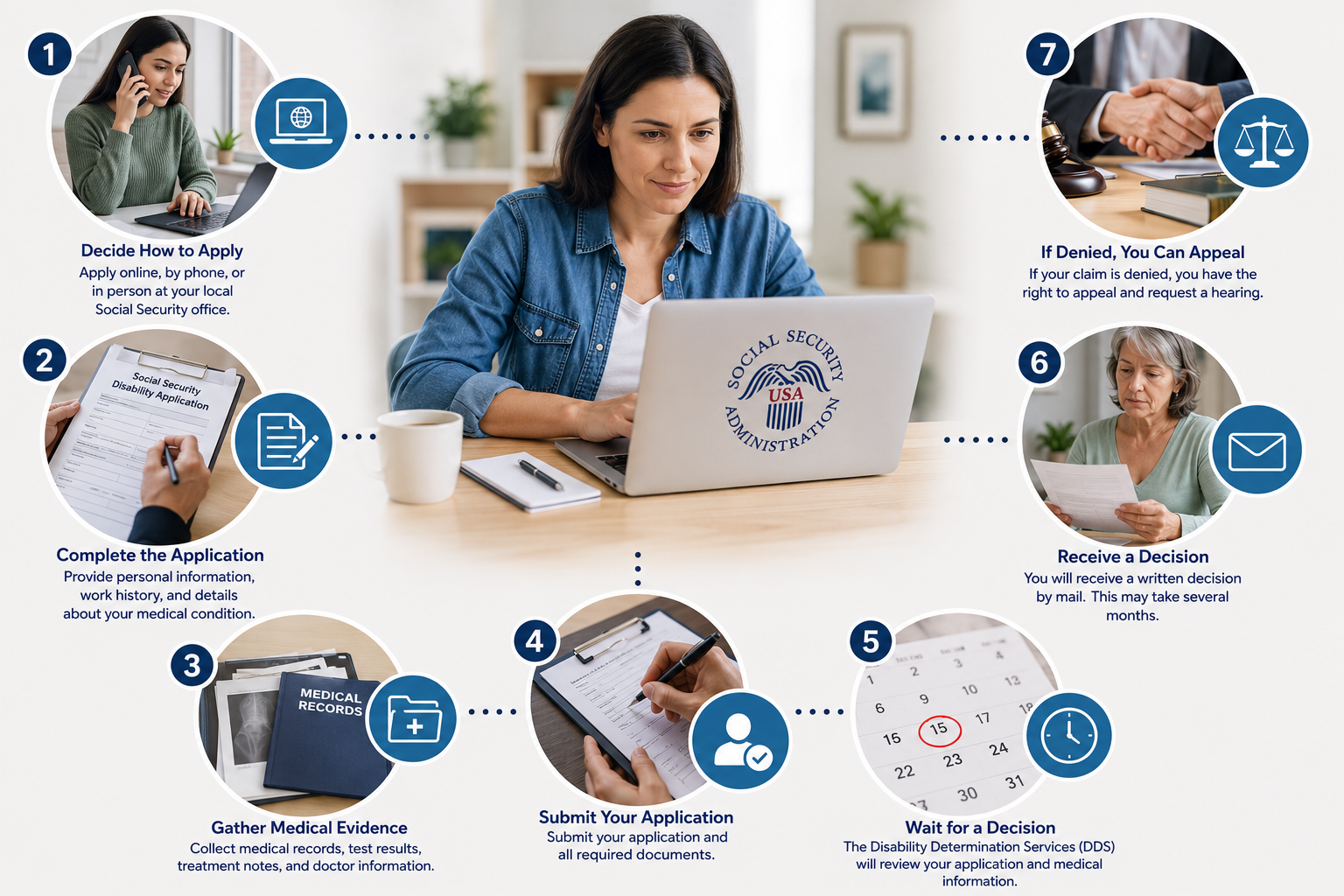


Receiving a denial on your Social Security Disability application is discouraging, but it’s important to understand that a denial is not a final answer. The SSA has a structured appeals process that gives applicants multiple opportunities to have their case reviewed — and many claims that were initially denied are ultimately approved through appeals. The appeals process has four stages.
Each stage has its own procedures, and most applicants move through them in sequence, though not every case requires all four steps. The first stage is reconsideration. A different SSA examiner — one who was not involved in the original decision — reviews your case along with any new evidence you submit. Reconsideration denial rates are high, and many cases proceed to the next stage.
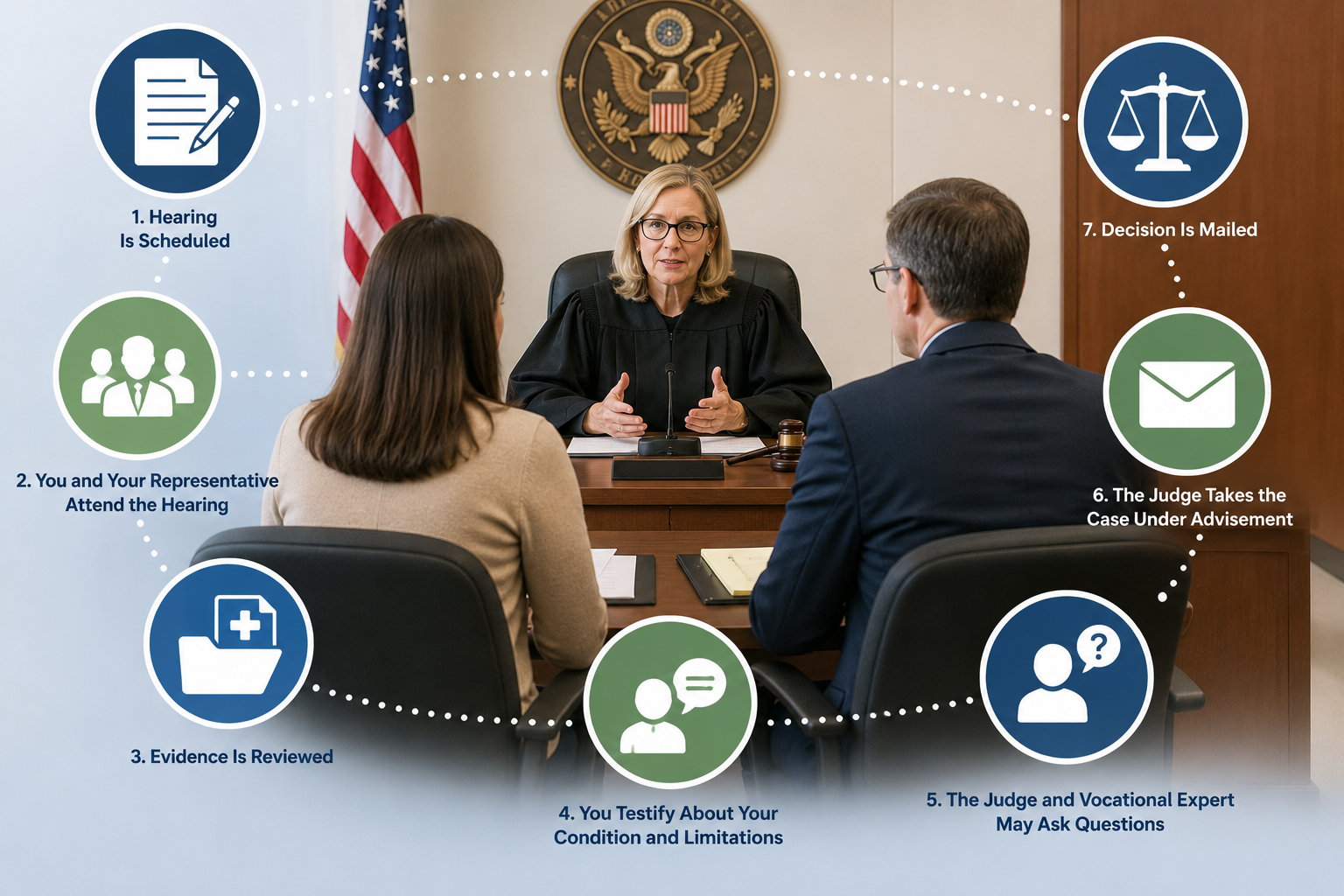
The second stage is a hearing before an administrative law judge (ALJ). This is the most significant stage for most applicants. You present your case in person, submit updated medical evidence, answer the judge’s questions, and have the opportunity to challenge the testimony of any vocational or medical expert. Approval rates at the hearing stage are substantially higher than at earlier stages.
If the ALJ denies your claim, you can request a review by the Social Security Appeals Council. The Appeals Council reviews the case for legal error and can affirm, reverse, or remand the decision back to an ALJ. If the Appeals Council denies review or upholds the denial, the final option is filing suit in federal district court. Federal court reviews focus on whether the SSA properly applied the law, rather than re-weighing the evidence.
Strict deadlines apply at every stage — typically 60 days from the denial notice. Missing a deadline can require starting over from the beginning.
Our team at Grech Law Firm Attorney & Counselor handles all stages of the SSDI and SSI appeals process for Michigan clients. Contact us for a free consultation.