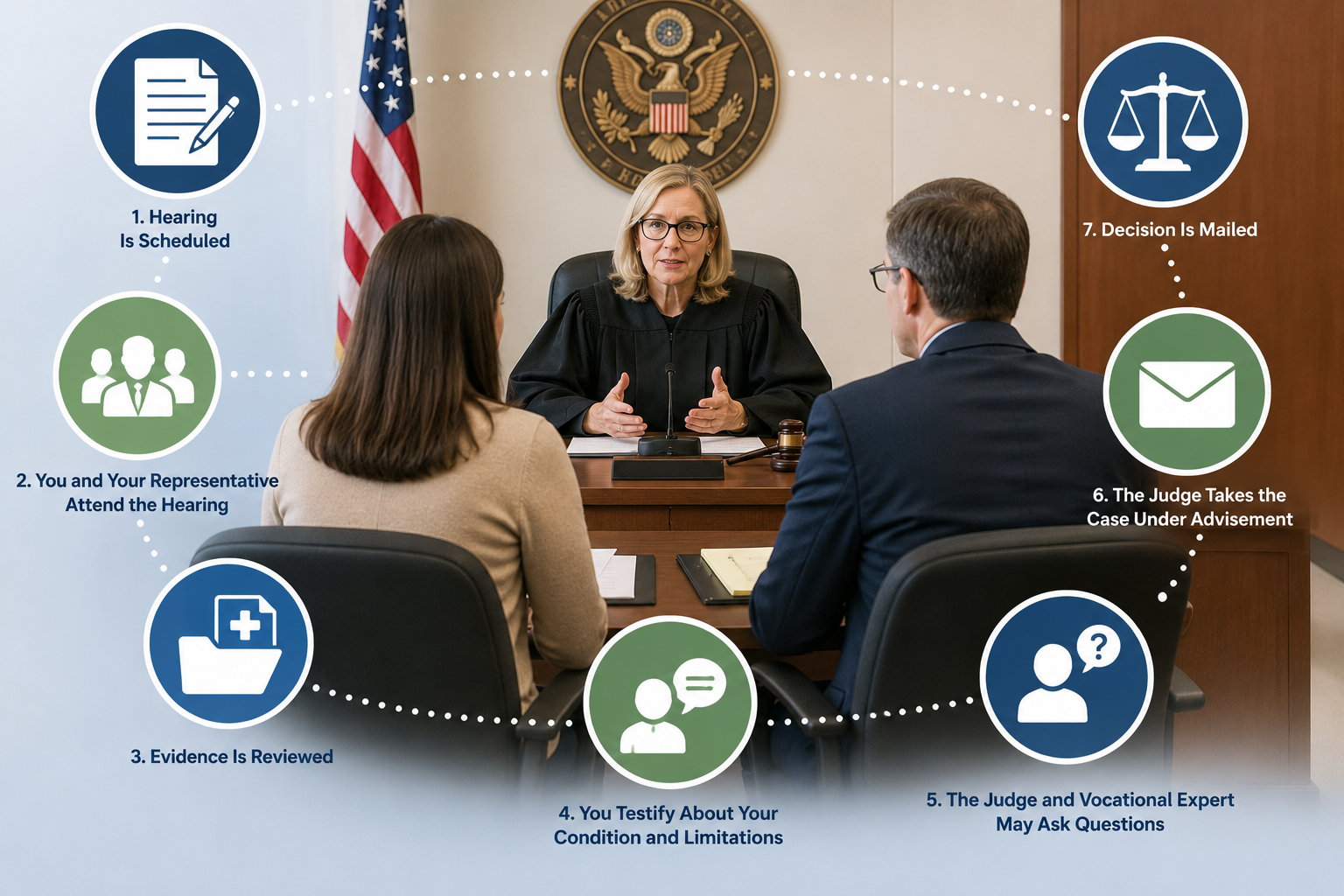


Attending a Social Security Disability hearing is a significant step in the claims process, but it isn’t the final one. After the hearing concludes, there is a period of review and deliberation before a decision is issued. Understanding what comes next can help reduce the uncertainty that often follows the hearing. The administrative law judge (ALJ) does not typically announce a decision on the day of the hearing.
Instead, the judge reviews the complete case record — including your medical evidence, testimony from the hearing, and any input from vocational or medical experts — before issuing a written decision. This review process generally takes between 30 and 90 days, though timelines can vary depending on the judge’s caseload. The written decision will be mailed to you and your representative.
It will explain the judge’s findings in detail, including whether your conditions meet the SSA’s definition of disability and whether you are capable of performing any type of work. If your claim is approved, the decision will also outline the onset date of your disability, which affects back pay calculations. If the ALJ approves your claim, the case moves to the SSA’s payment center to process your benefits.
This can take an additional few weeks to a couple of months. You will receive a separate notice detailing your benefit amount and any back pay owed. If the ALJ denies your claim, you still have options. You can request a review by the Social Security Appeals Council within 60 days of receiving the decision. If the Appeals Council denies review or issues an unfavorable ruling, you have the option to file a case in federal district court.
Our team at Grech Law Firm Attorney & Counselor represents clients through every stage of this process, including appeals after an unfavorable hearing decision. Contact us to discuss your situation.