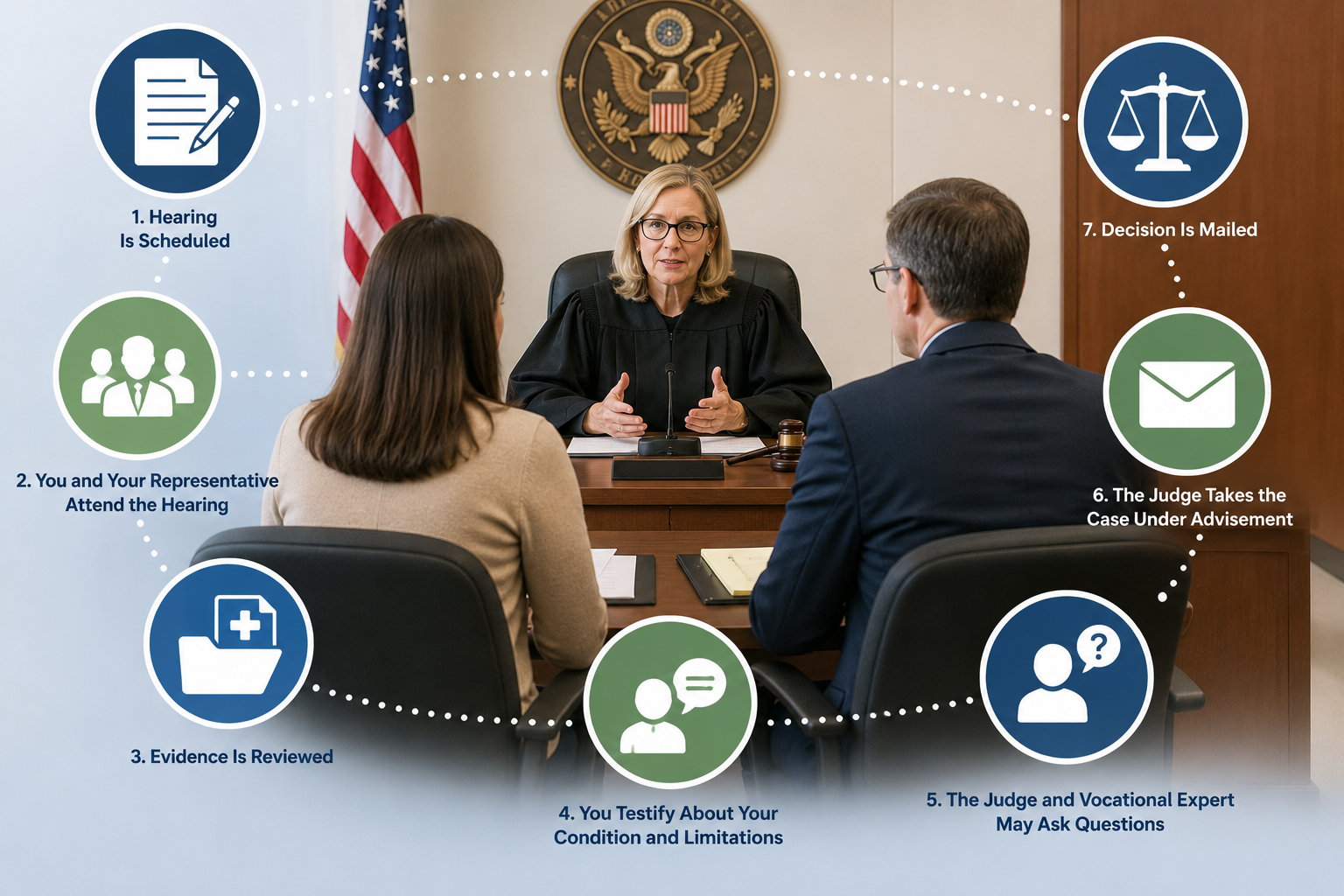


Many people assume the Social Security Disability process is straightforward — you fill out an application, submit your medical records, and wait for a decision. In reality, the process is complex, and applicants who navigate it without guidance are denied at significantly higher rates than those with experienced representation. The SSA’s eligibility criteria involve technical medical and vocational standards that aren’t self-explanatory.
Knowing how your condition maps to the SSA’s evaluation framework, what functional limitations matter most for your specific situation, and how to present your work history in a way that supports your claim requires knowledge of how the system works. At the initial application stage, an attorney helps ensure your application is complete, your medical evidence is organized, and your descriptions of your limitations are specific and aligned with what SSA reviewers are looking for.
Small details — like how you describe a job’s physical demands or the frequency of your worst symptom days — can affect how your claim is evaluated. At the appeals and hearing stages, the value of representation increases further. Preparing for a disability hearing involves reviewing medical records for gaps, coordinating with treating physicians, preparing for the judge’s questions, and understanding how to respond to vocational expert testimony.
Applicants who appear at hearings with legal representation are approved at substantially higher rates than those who appear alone. SSDI and SSI attorneys work on contingency, meaning there’s no upfront cost and no fee unless benefits are awarded. Federal law caps attorney fees in disability cases, so the cost is regulated and predictable.
Our team at Grech Law Firm Attorney & Counselor has helped Michigan disability claimants for over 25 years. Contact us for a free consultation — there’s no cost to speak with us.